Estimate — sign in for exact rates.

 Trusted GPU & AI infrastructure since 2015 — Huntsville, AL
20 GB GDDR6 · RDNA 3 · gfx1100

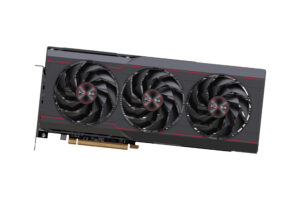
AMD Radeon RX 7900 XT 20GB

What this card can do

One card
27B models at 4-bit, 16K context
Two or more cards
27B at 8-bit, split across 2 cards
Windows
Windows preview, lab-measured
Linux
Linux lab alpha, unqualified

The RX 7900 XT has 20 GB of GDDR6 memory. Its proposed Qwen3.8-27B UD-IQ4_XS recipe uses a compact conversion and 16K catalog context, distinct from the XTX’s Q4 32K candidate. The practical question is whether the exact file, context and desktop memory load produce useful answers and latency on this card; the nominal weight size cannot settle that.

For two XTs, a Q8 model split across cards is a capacity experiment, while two IQ4 workers would handle independent jobs. A pair needs slot, negotiated PCIe-link, power and cooling checks. Bitworks has not yet qualified either exact recipe or published its own fit or speed measurements; external reports below use other configurations. Flash-Next remains a separate host-offload research path.

AMD specifications

Download FastLLM Preview 2026.10.21.12

FastLLM Preview 2026.10.21.12 is a signed Windows release for AMD Radeon graphics (a full release on GitHub, not a pre-release). It currently sets up the AMD Radeon RX 7900 XT 20GB. It is not a qualified release, and its recipes remain candidates.

Get FastLLM Preview 2026.10.21.12 on GitHub

On the release page, download FastLLM-Setup-2026.10.21.12.exe. The publisher shows as Bitworks LLC.
SHA-256 f96916b08caf5b06ecef51a688eac65621a925a2f566625aa86328a90182eb95

Test results for this release →

  • Microsoft Edge may say the file isn’t commonly downloaded while the publisher builds reputation.
  • Once installed, FastLLM shows an update banner when a newer version is available.

Models on this card

Qwen3.8-27B Model page

Bitworks

Measured by Bitworks on our lab bench with the published methodology. Not fully qualified: residency, peak VRAM, soak and reference-quality gates are not all proven for this run.

Community

Reported by the community and linked to each original. Results can differ on your system.

Related reports from the same author or project — not independent replication

UD-Q5_K_XL · 2 cards · Linux · llama.cpp HIP; ROCm 10 reported · by sterlp on GitHub

Reported on GitHub by sterlp — posted 2026-09-22 Original report

Eval bug: ROCm error: an illegal memory access was encountered 0.4.1

Method (as reported): Reporter retained a HIP illegal-memory-access log during intermittent inference; no controlled completed throughput.

  • Reported GPU setup 2 × RX 7900 XT
  • GPU count 2
  • Operating system Linux (Linux x86-64)
  • Engine llama.cpp 0.4.1-dev build 10964; reported commit b29c606
  • Backend HIP; ROCm 10 reported
  • Model Qwen3.8-27B UD-Q5_K_XL
  • Configured context 180,000 tokens
  • Actual input input length not reported
  • Full window tested no
  • Reported context Configured 180K window is not measured occupied input or demonstrated full-window fit.
  • Topology dual-split (Reported layer split with tensor split 0.55,0.45; active client count unreported.)
  • Speculative decoding draft MTP max 3 reported

Not reported: CPU, system memory, conversion provider, artifact SHA-256 and driver version, actual occupied input and full-window behavior, active concurrent clients and observed server slots, physical residency and completed request throughput, cause of the intermittent HIP failure

  • The issue is closed as duplicate of #20176 and remains bug-unconfirmed; this author report is not a universal HIP failure.
  • The -np -1 argument is not an observed slot or concurrent-client count; a log slot ID is not controlled concurrency.
  • This Linux HIP issue and the same author's Windows Vulkan stall issue #28744 are distinct reports, not independent replications.
  • The local GGUF filename does not establish the conversion provider.
  • No completed controlled dual-card rate, replica-versus-split comparison, or native-Windows result is supplied.

Setup guide (external)

Related link (external)

Unsloth UD-Q5_K_XL · 2 cards · Windows · llama.cpp Vulkan · by sterlp on GitHub

Reported on GitHub by sterlp — posted 2026-09-11 Original report

Dual RX 7900 XT Windows stream-stall issue

Method (as reported): Reporter describes one stalled streaming request and uncertain server/client cause; in-flight slot rate is not completed throughput.

  • Reported GPU setup 2 × RX 7900 XT
  • GPU count 2
  • Operating system Windows (native Windows x86-64)
  • Engine llama.cpp 0.4.0-dev build 10817; Clang 20.1.8
  • Backend Vulkan
  • Model Qwen3.8-27B Unsloth UD-Q5_K_XL (Unsloth)
  • Configured context 150,000 tokens
  • Actual input input length not reported
  • Full window tested no
  • Reported context Issue does not establish achieved prompt occupancy or completed work.
  • Topology not reported — Actual device split and active client count unreported.
  • Speculative decoding draft MTP max 4
  • CPU Ryzen 7 7800X3D

Not reported: model file checksum, topology, system memory, driver version, exact GPU device selection/split and residency, number of simultaneous clients and active slots, whether the server or client caused the stalled stream, completed request performance

  • Closed issue remains labeled bug-unconfirmed; the reporter was not certain the server caused the stall.
  • The server alias says Qwen3.6, but the model path is Qwen3.8; do not use the alias as model identity.
  • No numeric dual-GPU performance recommendation can be derived.

Setup guide (external)

Unsloth Q4_K_M · 1 card · Linux · llama.cpp via llmfit RADV/Vulkan · 30.83 ± 0.39 tok/s (other measure, see details) (synthetic) · by Akciali on GitHub

Reported on GitHub by Akciali — posted 2026-08-14 Original report

llmfit single RX 7900 XT Qwen3.8 submission

Method (as reported): llmfit bench --provider llamacpp; three separate forced-300-output runs; reported mean total duration 9.73093 s.

HEAD seen at retrieval: 9f1c5aebe76b (not necessarily the commit the author measured)

  • Reported GPU setup RX 7900 XT 20GB
  • GPU count 1
  • Operating system Linux (Linux distribution unreported)
  • Engine llama.cpp via llmfit llmfit 1.1.9; llama.cpp build unreported
  • Backend RADV/Vulkan
  • Model Qwen3.8-27B Unsloth Q4_K_M (Unsloth)
  • Configured context 4,096 tokens
  • Actual input input length not reported
  • Output 300 tokens
  • Full window tested no
  • Reported context Prompt occupancy unreported; 300 output tokens forced by ignore-eos.
  • Simultaneous clients 1
  • Topology single (Host has two same cards; submission says one used exclusively.)
  • CPU Intel Core i9-10900X
  • Memory configuration 62.49 GB reported by llmfit
  • 30.83 tok/s ± 0.39 (as reported, n = 3) — other (scope not stated) · Synthetic benchmark (not API serving) · 1 client
    Mean of three 300-output runs; min 30.67, max 31.06; average total duration 9.73093 s; timing phase unspecified.
    This row: configured context: 4,096 tokens · quantisation: Unsloth Q4_K_M

Not reported: system memory, llama.cpp build and driver version, exact model SHA-256 value, though submitter states Hub digest was checked, actual prompt-token occupancy, whether recorded throughput excludes prompt processing, concurrent-request behavior

  • Linux single-card result, not native Windows or dual-card scaling.
  • The JSON's memTierGb=16 conflicts with vramGb=19.98 and the named 20GB RX 7900 XT; do not convert that tier into a card specification.

Setup guide (external)

Related link (external)

Related reports from the same author or project — not independent replication

IQ2_XXS · Windows · ROCm/HIP as author describes · 66.5 tok/s generation · by EqualCryptographer67 on Reddit

Reported on Reddit by EqualCryptographer67 Original report

Qwen3.8-27B IQ2 single-response report on dual-XT host

Method (as reported): Median of nine IQ2 prompts; ROCm 2.46.0 is an author setup label, not the AMD driver or a verified engine build.

  • Reported GPU setup RX 7900 XT 20GB; two installed on host
  • GPU count not reported
  • Operating system Windows (native Windows 11)
  • Backend ROCm/HIP as author describes
  • Driver AMD 32.0.31041.1004
  • Model Qwen3.8-27B IQ2_XXS
  • Actual input input length not reported
  • Output 1,024 tokens
  • Full window tested no
  • Reported context Author says 8k context and roughly 700 input tokens; exact counts unreported.
  • Simultaneous clients 1
  • Topology not reported — Two cards installed; actual serving GPU count and card assignment unreported.
  • Speculative decoding MTP3 as author describes
  • CPU Ryzen 7 5800X3D
  • Memory configuration 128 GB DDR4 reported; byte convention unreported
  • Memory speed 3600 MT/s
  • Board Gigabyte B550 EAGLE WIFI6
  • PCIe XFX PCIe 4.0 x16; PowerColor chipset PCIe 3.0 x1
  • Host notes XFX/PowerColor downclocked; both power limit -10%.
  • 66.5 tok/s — generation speed (per request) · 1 client
    Author reports median across nine prompts, not a nine-request concurrent run.
    This row: quantisation: IQ2_XXS · speculative decoding: MTP3
  • 59.9 tok/s — other (per request) · 1 client
    Author labels this including prompt processing; exact timing formula unreported; not generation TPS.
    This row: quantisation: IQ2_XXS · speculative decoding: MTP3

Not reported: engine, configured context, topology, system memory, Exact serving GPU count and card assignment, Conversion provider, artifact digest and engine build, Actual prompt occupancy, metric timing formula and sample spread

  • Host has two GPUs, but a single-response result does not establish dual-GPU use.
  • No matched task-quality evaluation supports preferring IQ2 or IQ4 from speed alone.
  • The reduced clocks, power limits and chipset x1 path preclude transfer to a normal dual-card setup.
  • One author and host; no FastLLM recipe for this setup.

Setup guide (external)

IQ4_XS · Windows · ROCm/HIP as author describes · 46.4 tok/s generation · by EqualCryptographer67 on Reddit

Reported on Reddit by EqualCryptographer67 Original report

Qwen3.8-27B IQ4 single-response report on dual-XT host

Method (as reported): Author's three IQ4 runs; ROCm 2.46.0 is an author setup label, not the AMD driver or a verified engine build.

  • Reported GPU setup RX 7900 XT 20GB; two installed on host
  • GPU count not reported
  • Operating system Windows (native Windows 11)
  • Backend ROCm/HIP as author describes
  • Driver AMD 32.0.31041.1004
  • Model Qwen3.8-27B IQ4_XS
  • Actual input input length not reported
  • Output 1,024 tokens
  • Full window tested no
  • Reported context Author says 8k context and roughly 700 input tokens; exact counts unreported.
  • Simultaneous clients 1
  • Topology not reported — Two cards installed; actual serving GPU count and card assignment unreported.
  • Speculative decoding MTP3 as author describes
  • CPU Ryzen 7 5800X3D
  • Memory configuration 128 GB DDR4 reported; byte convention unreported
  • Memory speed 3600 MT/s
  • Board Gigabyte B550 EAGLE WIFI6
  • PCIe XFX PCIe 4.0 x16; PowerColor chipset PCIe 3.0 x1
  • Host notes XFX/PowerColor downclocked; both power limit -10%.
  • 46.4 tok/s — generation speed (per request) · 1 client
    Author's single-response IQ4 figure; three runs, aggregation method unreported.
    This row: quantisation: IQ4_XS · speculative decoding: MTP3
  • 43.1 tok/s — other (per request) · 1 client
    Author labels this including prompt processing; exact timing formula unreported; not generation TPS.
    This row: quantisation: IQ4_XS · speculative decoding: MTP3

Not reported: engine, configured context, topology, system memory, Exact serving GPU count and card assignment, Conversion provider, artifact digest and engine build, Actual prompt occupancy, metric timing formula and sample spread

  • Host has two GPUs, but a single-response result does not establish dual-GPU use.
  • No matched task-quality evaluation supports preferring IQ2 or IQ4 from speed alone.
  • The reduced clocks, power limits and chipset x1 path preclude transfer to a normal dual-card setup.
  • One author and host; no FastLLM recipe for this setup.

Setup guide (external)

IQ4_XS · Windows · 103.5 tok/s generation (aggregate) · by EqualCryptographer67 on Reddit

Reported on Reddit by EqualCryptographer67 Original report

Qwen3.8-27B IQ4 two-copy C16 aggregate report

Method (as reported): Author's combined C16 throughput for two model copies; actual copy-to-card binding and repeated-sample method unreported.

  • Reported GPU setup RX 7900 XT 20GB; two installed on host
  • GPU count not reported
  • Operating system Windows (native Windows 11)
  • Driver AMD 32.0.31041.1004
  • Model Qwen3.8-27B IQ4_XS
  • Actual input input length not reported
  • Reported context C16 request sizes, configured/occupied context and output counts are unreported.
  • Simultaneous clients 16
  • Topology not reported — Two separate model copies; process count and GPU-to-copy binding unreported.
  • CPU Ryzen 7 5800X3D
  • Memory configuration 128 GB DDR4 reported; byte convention unreported
  • Memory speed 3600 MT/s
  • Board Gigabyte B550 EAGLE WIFI6
  • PCIe XFX PCIe 4.0 x16; PowerColor chipset PCIe 3.0 x1
  • Host notes XFX/PowerColor downclocked; both power limit -10%.
  • 103.5 tok/s — generation speed (aggregate across clients) · 16 clients
    Author reports combined generation throughput for two IQ4 copies at 16 concurrent requests; not per-response decode.
    This row: quantisation: IQ4_XS · topology: other · cards: not reported for this row

Not reported: engine, configured context, system memory, GPU-to-copy binding and actual serving GPU count, Replica process count, engine build and GGUF artifact digest, C16 request sizes, occupied contexts and output counts, C16 timing formula, repetitions and per-client latency/fairness, C16 request errors and task-quality checks

  • The reported figure is combined capacity across concurrent requests, not one user's decode speed.
  • The single-response IQ4 settings cannot be assigned to the C16 arm without evidence.
  • Author says splitting one model was slower, but supplies no matched numeric split measurement or defined comparator.
  • One author and host; no FastLLM recipe for this setup.

Setup guide (external)

Related reports from the same author or project — not independent replication

asymmetric AWQ int4 checkpoint · 2 cards · Linux · vLLM ROCm · 12.3 tok/s generation · by cadamcat on GitHub

Reported on GitHub by cadamcat · measured 2026-08-24 Original report

Dual Radeon vLLM: Qwen3.8 checkpoint campaign

Method (as reported): Random-prefix request ladder; decode first token to last; one stack per campaign.

HEAD seen at retrieval: 60c702076233 (not necessarily the commit the author measured)

  • Reported GPU setup 2 × RX 7900 XT 20GB
  • GPU count 2
  • Operating system Linux (Proxmox VFIO Linux guest)
  • Environment VM guest
  • Engine vLLM 0.23 patched container
  • Backend ROCm
  • Model Qwen3.8-27B asymmetric AWQ int4 checkpoint
  • Actual input input length not reported
  • Reported context Author reports depth ladder with random prefixes, without a configured-context claim.
  • Simultaneous clients 1
  • Workers 1
  • Topology dual-split (Tensor parallel, no P2P, VFIO guest)
  • CPU Threadripper 1950X
  • Board X399
  • PCIe cross-die PCIe 3.0
  • 12.3 tok/s — generation speed (per request) · API server · 1 client
    First-to-last decode at roughly 500-token depth; TTFT excluded
  • 10.7 tok/s — generation speed (per request) · API server · 1 client
    First-to-last decode at roughly 32000-token depth; TTFT excluded

Not reported: system memory, Checkpoint digest, Exact configured context, Per-row variance, Native Windows result, Concurrent-client throughput

  • This asymmetric checkpoint missed the native gfx1100 W4A16 kernel.
  • Later vLLM and attention-patch results are separate software stacks.
  • Same author and host as related dual-XT rows; not an independent replication.

Setup guide (external)

same asymmetric AWQ int4 checkpoint · 2 cards · Linux · vLLM ROCm 10.0 · 35.2 tok/s generation · by cadamcat on GitHub

Reported on GitHub by cadamcat Original report

Dual Radeon: controlled Qwen3.8 split-KV attention test

Method (as reported): Two reverse-order A/B passes; fresh container per cell; same checkpoint; attention file only changed.

HEAD seen at retrieval: 60c702076233 (not necessarily the commit the author measured)

  • Reported GPU setup 2 × RX 7900 XT 20GB
  • GPU count 2
  • Operating system Linux (Proxmox VFIO Linux guest)
  • Environment VM guest
  • Engine vLLM 0.27.1.dev
  • Backend ROCm 10.0
  • Model Qwen3.8-27B same asymmetric AWQ int4 checkpoint
  • Actual input input length not reported
  • Reported context Approximate reported depth rungs; exact occupied inputs not established here.
  • Simultaneous clients 1
  • Workers 1
  • Topology dual-split (Tensor parallel, no P2P, VFIO guest)
  • CPU Threadripper 1950X
  • Board X399
  • PCIe cross-die PCIe 3.0
  • 35.2 tok/s — generation speed (per request) · API server · 1 client
    Compared with 3.83 tok/s (split-KV PR versus stock, first pass); reported difference: engine build
    First pass at reported 32768-token depth; same checkpoint and harness
  • 37.05 tok/s — generation speed (per request) · API server · 1 client
    Compared with 3.81 tok/s (split-KV PR versus stock, reverse-order pass); reported difference: engine build
    Second pass at reported 32768-token depth; warm-up discarded
  • 51.81 tok/s — generation speed (per request) · API server · 1 client
    Compared with 37.04 tok/s (split-KV PR versus stock, first pass); reported difference: engine build
    First pass at reported 1024-token depth; same checkpoint and harness
  • 51.43 tok/s — generation speed (per request) · API server · 1 client
    Compared with 37.76 tok/s (split-KV PR versus stock, reverse-order pass); reported difference: engine build
    Second pass at reported 1024-token depth; warm-up discarded

Not reported: configured context, system memory, Checkpoint digest, Exact container digest in summary, Native Windows applicability, Multi-client behavior, Broader task quality

  • The tested split-KV PR is unmerged and not a stock vLLM feature.
  • Linux VFIO test is not a native Windows deployment result.
  • An intermediate depth had two distinct performance modes and is not represented as one stable value.
  • Related cadamcat rows are the same host and author, not independent replication.
Setup guide (external)

Related link (external)

Qwen3.8-Flash-Next

Bitworks

Bitworks: no recipe for this card yet.

Community

Related reports from the same author or project — not independent replication

Unsloth UD-IQ4_XS · 2 cards · Windows · Vulkan as author describes · 5.5–6.5 tok/s generation · by EqualCryptographer67 on Reddit

Reported on Reddit by EqualCryptographer67 Original report

Flash-Next two-GPU Vulkan host-offload report

Method (as reported): Individual short runs; Vulkan 2.51.0 is an author setup label, not the AMD driver or a verified engine build.

  • Reported GPU setup RX 7900 XT 20GB
  • GPU count 2
  • Operating system Windows (native Windows 11)
  • Backend Vulkan as author describes
  • Driver AMD 32.0.31041.1004
  • Model Qwen3.8-Flash-Next Unsloth UD-IQ4_XS (Unsloth)
  • Actual input input length not reported
  • Full window tested no
  • Reported context Author says 256k configured context, mostly empty; exact integer and occupancy unreported.
  • Simultaneous clients 1
  • Topology dual-split (Author reports Vulkan tensor split 1:1 on two cards.)
  • Speculative decoding MTP off
  • Offload experts-to-host (--n-cpu-moe 28; PLE on CPU; precise residency unverified)
  • CPU Ryzen 7 5800X3D
  • Memory configuration 128 GB DDR4 reported; byte convention unreported
  • Memory speed 3600 MT/s
  • Board Gigabyte B550 EAGLE WIFI6
  • PCIe XFX PCIe 4.0 x16; PowerColor chipset PCIe 3.0 x1
  • Host notes Eight CPU threads reported; cards downclocked, -10% power.
  • 5.5–6.5 tok/s — generation speed (per request) · 1 client
    Author's range over individual short host-offloaded runs; configured window mostly empty.
    This row: quantisation: Unsloth UD-IQ4_XS · speculative decoding: MTP off · topology: dual-split
  • 3.3–5.7 tok/s — other (per request) · 1 client
    Author's including-prompt-processing range; exact timing formula unreported; not generation TPS.
    This row: quantisation: Unsloth UD-IQ4_XS · speculative decoding: MTP off · topology: dual-split

Not reported: engine, configured context, system memory, Exact engine build and model digest, Occupied prompt and physical host/GPU model residency, Output count, repeated-sample spread and response correctness

  • Around 93.7 GB is the author's reported model size, not a verified GGUF file length.
  • Host offload is involved; this is not an all-GPU FastLLM recipe or an occupied 256k-window result.
  • The single-GPU ROCm arm changes backend, context, KV and offload, so no controlled ratio is available.
  • Flash-Next has separate terms and is not in the approved FastLLM automatic catalog.

Setup guide (external)

Unsloth UD-IQ4_XS · 1 card · Windows · ROCm/HIP as author describes · 8.6 tok/s generation · by EqualCryptographer67 on Reddit

Reported on Reddit by EqualCryptographer67 Original report

Flash-Next one-GPU ROCm host-offload report

Method (as reported): Individual short warm run; ROCm 2.49.0 is an author setup label, not the AMD driver or a verified engine build.

  • Reported GPU setup RX 7900 XT 20GB; one GPU used on two-card host
  • GPU count 1
  • Operating system Windows (native Windows 11)
  • Backend ROCm/HIP as author describes
  • Driver AMD 32.0.31041.1004
  • Model Qwen3.8-Flash-Next Unsloth UD-IQ4_XS (Unsloth)
  • Actual input input length not reported
  • Full window tested no
  • Reported context Author says 8k context; exact integer and occupied prompt unreported.
  • Simultaneous clients 1
  • Topology single (One GPU warm run on host with two installed cards.)
  • Speculative decoding MTP off
  • Offload experts-to-host (--n-cpu-moe 42; PLE on CPU; precise residency unverified)
  • CPU Ryzen 7 5800X3D
  • Memory configuration 128 GB DDR4 reported; byte convention unreported
  • Memory speed 3600 MT/s
  • Board Gigabyte B550 EAGLE WIFI6
  • PCIe XFX PCIe 4.0 x16; PowerColor chipset PCIe 3.0 x1
  • Host notes Eight CPU threads reported; which GPU used unreported.
  • 8.6 tok/s — generation speed (per request) · 1 client
    Author's single warm host-offloaded short run; no full-window occupancy.
    This row: quantisation: Unsloth UD-IQ4_XS · speculative decoding: MTP off
  • 5.7 tok/s — other (per request) · 1 client
    Author labels this including prompt processing; exact timing formula unreported; not generation TPS.
    This row: quantisation: Unsloth UD-IQ4_XS · speculative decoding: MTP off

Not reported: engine, configured context, system memory, Exact serving card, engine build and model digest, Occupied prompt and physical host/GPU model residency, Output count, repeated-sample spread and response correctness

  • Around 93.7 GB is the author's reported model size, not a verified GGUF file length.
  • Host offload is involved; this is not an all-GPU FastLLM recipe.
  • The dual-GPU Vulkan arm changes backend, context, KV and offload, so no controlled ratio is available.
  • Flash-Next has separate terms and is not in the approved FastLLM automatic catalog.

Setup guide (external)

References

Qwen3.6-27B

Bitworks

Bitworks: no recipe for this card yet.

Community

Q4_K_M · 2 cards · Linux · llama.cpp ROCm and Vulkan · 28.61 tok/s generation (synthetic) · by cadamcat on GitHub

Reported on GitHub by cadamcat Original report

Dual Radeon vLLM: llama.cpp layer-split comparison

Method (as reported): Two-card llama-bench depth sweep, tg128, layer split; ROCm and Vulkan.

HEAD seen at retrieval: 60c702076233 (not necessarily the commit the author measured)

  • Reported GPU setup 2 × RX 7900 XT 20GB
  • GPU count 2
  • Operating system Linux (Proxmox VFIO Linux guest)
  • Environment VM guest
  • Engine llama.cpp 47c786924
  • Backend ROCm and Vulkan
  • Model Qwen3.6-27B Q4_K_M
  • Actual input input length not reported
  • Output 128 tokens
  • Reported context Author swept recorded prompt depths from 512 to 32768.
  • Simultaneous clients 1
  • Workers 1
  • Topology dual-split (Two cards, layer split, no P2P, VFIO guest)
  • CPU Threadripper 1950X
  • Board X399
  • PCIe cross-die PCIe 3.0
  • 28.61 tok/s — generation speed (per request) · Synthetic benchmark (not API serving) · 1 client · input 512 tokens
    Compared with 24.89 tok/s (Vulkan versus ROCm at 512-token depth); reported difference: other
    llama-bench tg128; Vulkan reported, ROCm baseline
  • 26.04 tok/s — generation speed (per request) · Synthetic benchmark (not API serving) · 1 client · input 32,768 tokens
    Compared with 21.84 tok/s (Vulkan versus ROCm at 32768-token depth); reported difference: other
    llama-bench tg128; Vulkan reported, ROCm baseline

Not reported: configured context, system memory, Exact GGUF digest, Repetition count and variance, Native Windows result, Concurrent API behavior

  • Qwen3.6 is not Qwen3.8.
  • Linux VFIO without P2P does not establish bare-metal or native Windows speed.
  • Synthetic decode is not concurrent API throughput.

Setup guide (external)

Not yet covered by any approved report: No controlled, completed native-Windows Qwen3.8-27B throughput comparison was verified for dual RX 7900 XT at matched context and concurrent load. A reported stream stall is not a measured result.

Discussion

Share setups, questions and your own results. Posts are reviewed before they appear. Replies from Bitworks staff are marked.

Log in Create an account to join the discussion.

Bitworks listings for this card