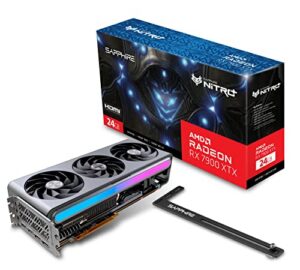
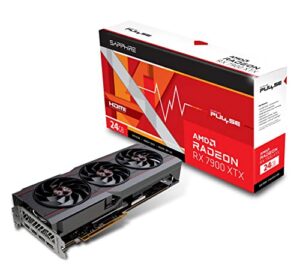
Qwen3.8-27B UD-Q4_K_M on the Radeon RX 7900 XTX 24GB (Windows, HIP)
Candidate
HIP engine setup for the RX 7900 XTX 24GB on Windows, measured by Bitworks. FastLLM picks it on this card and falls back to Vulkan if it cannot use it.
What will be tested
| Card | 1 × AMD Radeon RX 7900 XTX 24GB |
|---|---|
| Operating system | Windows |
| Backend | HIP |
| Model | Qwen3.8-27B (Apache-2.0) |
| Model file | Unsloth GGUF conversion, UD-Q4_K_M |
| Context | 32,768 tokens |
| Concurrent requests | 1 (one request at a time) |
| Placement | Full GPU |
| Reviewed | Not yet |
| Sources | Upstream model · GGUF file page |
What to expect
No qualified Bitworks benchmark is published for this recipe. A lab observation is shown below.
Bitworks lab observation (not fully qualified)
Measured by Bitworks on our lab bench with the published methodology. Not fully qualified: residency, peak VRAM, soak and reference-quality gates are not all proven for this run.
FastLLM recipe: rx-7900-xtx.qwen3.8-27b-ud-q4-k-m.32k.hip
Deploy with FastLLM Preview 2026.10.21.12: this is the setup FastLLM picks for this card. FastLLM asks you to accept AMD’s license before installing its components, or installs them automatically if you turned that on.
- Engine: llama.cpp b11658
- Backend: hip
- Context: 32,768 tokens
- KV cache: f16/f16
- Slots: 1
| Prompt tokens | Prompt processing (tok/s) | Generation (tok/s) | Time to first text (ms) |
|---|---|---|---|
| 512 | 876.3 (839.4–894.6) | 33.7 (33.1–36.4) | 587 (575–613) |
| 4,096 | 1,056.5 (1,052.9–1,070.2) | 32.8 (32.7–35.8) | 3,880 (3,833–3,893) |
FastLLM self-test on this bench
Result: Passed
33.5 tok/s generation · 870.8 tok/s prompt · 590 ms to first text — 512-token prompt, 2 measured runs after 1 warm-up, server timings
FastLLM runs this quick check before it reports a setup ready. It is a short check, not the benchmark above, so the numbers are not directly comparable.
Download FastLLM Preview 2026.10.21.12
FastLLM Preview 2026.10.21.12 is a signed Windows release for AMD Radeon graphics (a full release on GitHub, not a pre-release). It currently sets up the AMD Radeon RX 7900 XTX 24GB. It is not a qualified release, and its recipes remain candidates.
Overview
This is the HIP variant of the Vulkan recipe for the same card, model and quantization. It uses the same Qwen3.8-27B UD-Q4_K_M weights from Unsloth (a third-party GGUF conversion of the Qwen upstream weights), the same context size and the same concurrency. The Vulkan recipe sets no separate KV cache options, so neither does this one. Only the engine changes: llama.cpp build b11658 compiled for HIP, running on the AMD ROCm 10.0 runtime (rocBLAS and hipBLASLt for gfx1100).
Bitworks has measured this setup on the Radeon RX 7900 XTX 24GB through FastLLM 2026.10.15.5, using llama.cpp b11658 (HIP) with the AMD ROCm 10.0 runtime. The measured results are shown with the observation on this page. The recipe itself stays a candidate.
FastLLM picks this HIP setup automatically on this card. The first time, it shows "Install engine components" with the license links for the AMD ROCm runtime and the llama.cpp HIP engine, and installs them once you accept. If you turned on automatic installation of engine components, it installs them without asking. The extra download is about 565 MB (about 2.33 GB on disk once unpacked), from github.com and stable.repo.amd.com. If the components are not installed, their license is declined, or Windows blocks or cannot load them, FastLLM uses the Vulkan setup for this card instead and says so.
Requirements
- Windows with a current AMD graphics driver for the Radeon RX 7900 XTX 24GB.
- FastLLM, which is still in development.
- The AMD ROCm 10.0 runtime. FastLLM fetches it from AMD onto your PC the first time it sets up this card.
- Your acceptance of each component's license. FastLLM asks before anything downloads, unless you turned on automatic installation of engine components.
Use it
- In FastLLM, click Install & start. FastLLM picks this setup for the card.
- Accept each component's license when asked. Nothing downloads before you accept. FastLLM then fetches the engine and the AMD ROCm 10.0 runtime onto your PC.
- Accept the model license when asked. FastLLM downloads the model and starts the HIP setup.
If you do not accept the component licenses, FastLLM uses the Vulkan setup for this card instead and says so. You can install the HIP setup later from "Choose another setup".
Limitations
- Measured by Bitworks through FastLLM 2026.10.15.5 on this card. The observation shown on this page is a lab observation, not a qualification of this setup.
- FastLLM picks this setup automatically on this card. It asks you to accept AMD's license and the engine's license before anything downloads, unless you turned on automatic installation of engine components.
- If the HIP components are not installed, their license is declined, or Windows blocks or cannot load them, FastLLM uses the Vulkan setup instead and says so.
- The Windows alpha is text-only and does not enable vision or speculative decoding.
- AMD driver setup remains separate from FastLLM.
Bitworks listings for this card
-
In stock
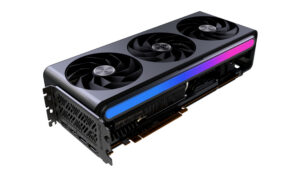 Sapphire
 Nitro+ AMD Radeon RX 7900 XTX Vapor-X Gaming Graphics Card with 24GB GDDR6
$1,049.99 Manufacturer refurbished -
Out of stock
 Sapphire
Open Box: Sapphire AMD Radeon RX 7900 XTX Graphics Card 24GB GDDR6, 21322-01-20G
$899.99 New (other)Notify me -
Out of stock
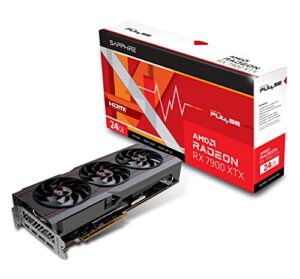 Sapphire
 Pulse AMD Radeon RX 7900 XTX 24GB GDDR6 Gaming Graphics Card
$929.99 Manufacturer refurbishedNotify me